
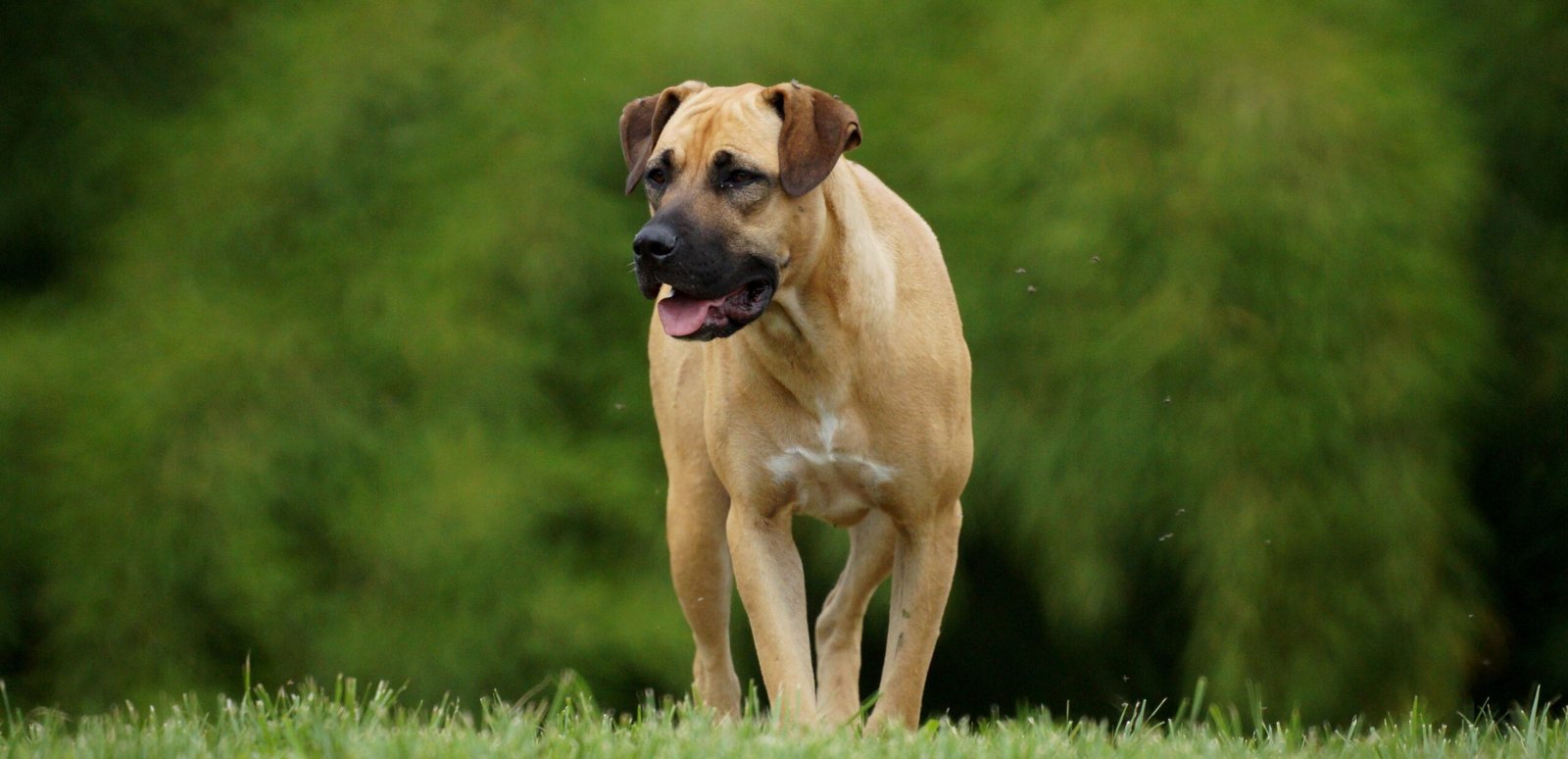

Training a Boerboel isn’t about dominating a powerful dog into submission. It’s not about being harsh or “showing who’s boss.” Those approaches actually backfire with this breed — Boerboels shut down under harsh pressure or, worse, push back.
What works is being clear, consistent, and fair. These dogs are smart. They respond to training that makes sense to them, from people they trust. The good news is that a trained Boerboel is an absolute pleasure to own. The work you put in early pays off every single day for the next decade.
How Boerboels Learn (and Why Generic Advice Often Fails)
Boerboels were bred to work independently — patrolling farms overnight, making their own threat assessments without a person directing every decision. That independence is still in them. It means they don’t just obey because you said so. They respond to clear, consistent guidance from a person they trust and respect.
✅ What Works
- Positive reinforcement with high-value treats
- Short sessions, 5–10 min, multiple times daily
- Consistent rules from everyone in the household
- Calm, confident corrections
- Ending every session on a success
- Building on what they know before adding complexity
❌ What Doesn’t Work
- Harsh physical corrections
- Repeating the same command over and over
- Shouting or losing patience
- Long, repetitive drilling sessions
- Inconsistent rules between family members
- Only training in one location
One thing we’ve learned from placing hundreds of Boerboel puppies: the families that struggle with training almost always have an inconsistency problem, not a dog problem. When one person enforces rules and another doesn’t, Boerboels figure out quickly who can be pushed and who can’t. They don’t generalize rules — they apply them person by person. Everyone in the house needs to be on the same page.
Start Training Day One — Not “Once They Settle In”
There’s a common idea that new puppies need a week to “settle in” before training starts. Don’t wait. An 8-week-old Boerboel is fully capable of learning name recognition, sit, come, and leave it. The habits you establish in the first two weeks become the foundation for everything that follows.
More importantly, every day you delay is a day the puppy is forming its own habits — about jumping up, about pulling toward things, about what happens when they whine. You’re always training, whether you’re doing it intentionally or not.
📋 What to Train First (Week-by-Week)
- Week 1 (8 weeks): Name recognition, sit, potty training, crate introduction
- Week 2–3: Come, leave it, down, no jumping
- Week 4–8: Stay, leash introduction, loose-leash basics, socialization outings
- Months 3–6: Heel, stay with distance and duration, greeting visitors
- Ongoing: Practice everywhere — kitchen, yard, street, pet store
The Commands That Matter Most
Sit — Teach This First
Sit is the foundation. Once the dog will sit reliably, you can use it as the basis for everything else — sitting to greet people instead of jumping, sitting before crossing the street, sitting before meals. It’s the “please” of dog language.
Teaching Sit
- Hold a treat just above the puppy’s nose
- Slowly move it back over their head — they’ll sit naturally to follow it
- Say “Sit” the moment their bottom hits the ground
- Reward immediately and praise
- Practice 5–10 reps, 3x daily — done in under 3 minutes each time
Come — The Safety Command
Recall is the most important command for a large guardian breed. A Boerboel without reliable recall cannot be safely controlled around other dogs, strangers, or in open spaces. This command needs to be so reliable it works even when the dog is excited or distracted.
Teaching Come
- Start in a small enclosed area with no distractions
- Say the dog’s name and “Come!” in your most enthusiastic voice
- Back away or crouch down — movement encourages them to follow
- When they reach you, reward generously — make it the best thing that’s ever happened
- Never call them to come and then do something they don’t like (baths, nail trims) — go get them instead
- Practice on a long line (15–20 feet) outdoors before trying off-leash
Leave It and Out
These two commands are different: “Leave it” means don’t touch that. “Out” or “Drop it” means release what you have. Both are safety commands for a dog that can carry serious items in its mouth. Start with treats and progress to toys, then real-world objects.
Down and Stay
Down is a calming command — it’s harder to be reactive lying down. Stay with distance and duration is essential for managing a Boerboel in situations like greeting visitors at the door or waiting while you talk to a neighbor. Build these gradually: distance first, then duration, then distractions — not all three at once.
Leash Training — Non-Negotiable
An adult Boerboel that pulls on a leash is a genuine safety problem. At 150–200 lbs, a dog that decides to lunge toward another dog or a person can pull you off your feet. Leash manners aren’t optional with this breed — they’re safety-critical.
⚠️ Start This Before the Puppy Gets Big
Pulling habits formed at 20 lbs are still there at 170 lbs — they’re just 8x harder to deal with. Start leash work from the first week home. A front-clip harness gives you better control than a collar during the training phase. Never use a retractable leash with a Boerboel at any age.
The core method: the moment the leash goes tight, stop completely. Don’t keep walking while being dragged. Stand still until the dog comes back and creates slack, then continue. This is slow at first but consistent practice — every walk, every day — produces reliable results within a few weeks for most puppies.
Changing direction also works well: when the dog forges ahead, simply turn and walk the other direction. They have to catch up, and the surprise breaks the pulling habit faster than standing still.
Common Training Problems and How to Fix Them
Jumping Up
Turn away completely — no eye contact, no touch, no “no.” Any attention, even negative attention, reinforces jumping. When all four paws are on the floor, reward calmly. The replacement behavior is “sit to greet” — the dog learns that sitting is what gets them attention. This only works if every single person who interacts with the dog enforces it. One person who lets jumping happen (even occasionally) keeps the behavior alive.
Resource Guarding
Growling over food, toys, or a resting spot is a warning signal — never punish growling, because it removes the warning and leaves the bite. Instead, work on building positive associations with people approaching valued items. Hand-feed meals regularly. Drop treats into the bowl while they’re eating. Trade for items they have rather than taking. For anything beyond mild guarding, get professional help early — this behavior escalates if not addressed correctly.
Barking at the Door
Alert barking is appropriate for this breed — you want them to announce visitors. The issue is duration and escalation. Allow 2–3 barks, then give a clear “Quiet” or “Enough” command. Reward when they stop. Practice this by having friends ring the doorbell repeatedly until the dog understands the routine. Combine with a “Place” command so the dog goes to their bed when the door opens.
Not Listening to Commands They Know
Check two things first: consistency (is everyone enforcing the same rules?) and generalization (has this command only been practiced at home?). Commands trained in the living room often don’t transfer automatically to the front yard, the park, or a pet store. Practice known commands in new places with increasing distraction levels before concluding the dog “forgot.”
Surviving Adolescence (6–18 Months)
Most Boerboel training breakdowns happen during adolescence. The dog that was doing well at 5 months suddenly seems to “forget” everything at 8 months. This is normal, it’s predictable, and it passes — but only if you stay consistent.
What’s happening: the adolescent brain is reorganizing. The dog is testing where boundaries are, which rules are real and which ones bend. Hormones are active. This is also when protective instincts start strengthening, which means the dog may begin reacting to strangers or other dogs in new ways.
The response is to stay the course — don’t ease up on rules because the dog is harder to manage right now. Increase exercise and mental stimulation (a tired Boerboel is a better-behaved Boerboel). Continue training. Consider a group obedience class for the structured distraction environment. The dog you get on the other side of this phase is worth the work.
When to Get Professional Help
We recommend at least one group obedience class for every Boerboel — not because owners can’t train their own dogs, but because a class environment provides socialization, distraction training, and professional feedback that home training alone can’t replicate.
Seek one-on-one professional help if you’re seeing: leash reactivity toward other dogs or people, any form of aggression (toward family, guests, or strangers), resource guarding beyond the mildest level, or behavior you genuinely can’t manage. Early intervention is always easier than trying to fix ingrained patterns later.
Look for trainers with experience in large guardian breeds who use positive reinforcement. Credentials to look for: CPDT-KA (Certified Professional Dog Trainer) or IACP member. Be wary of anyone who recommends dominance-based methods or physical corrections — these approaches produce the opposite of what you want with a Boerboel.
For more on socialization as a foundation for training, see our socialization guide. For protection-specific behavior, see our protection training guide.